
Same-day dispatch
Order before 2pm ET — ships from Toronto
COA in every box
Batch-matched third-party certificate
Cold-pack shipped
Temperature-controlled packaging
Purity guarantee
Below spec? Replaced or refunded
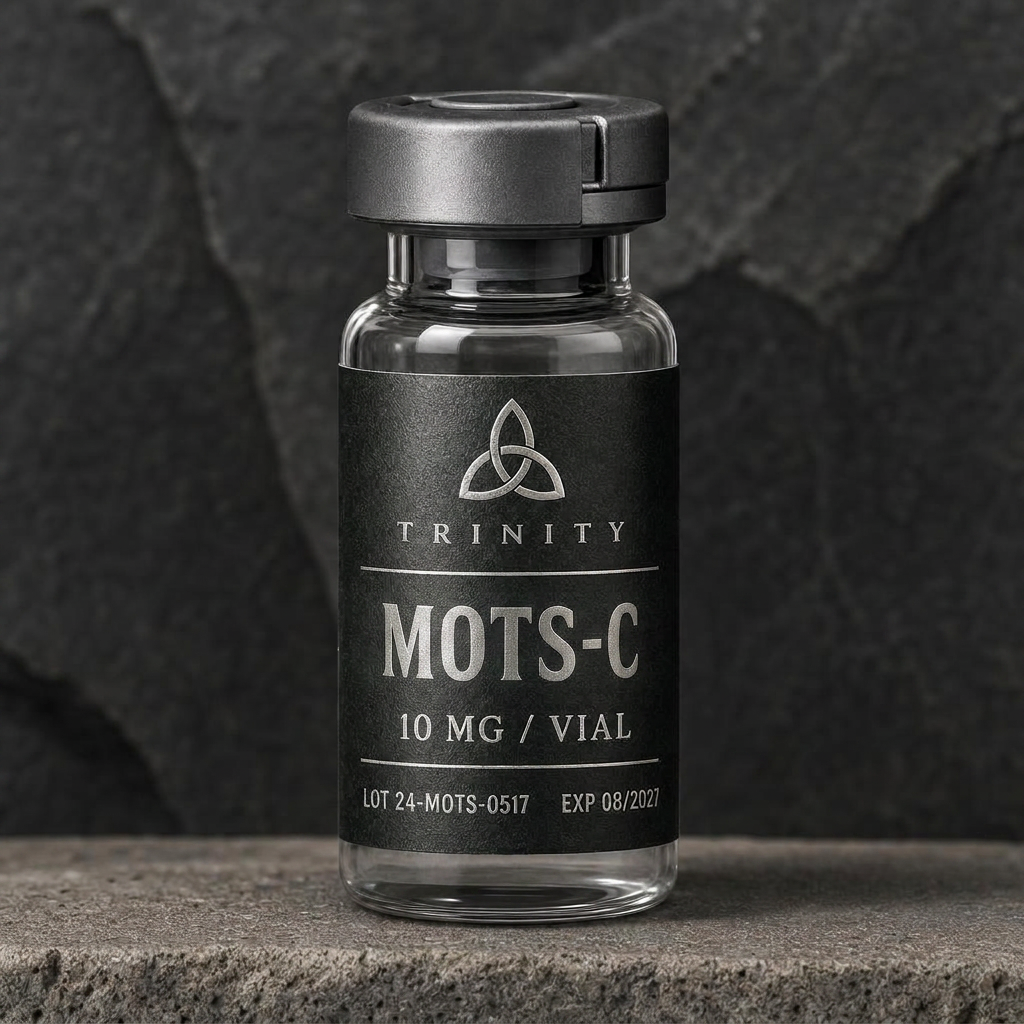
MOTS-c
The Mitochondrial-Derived Peptide Driving Exercise-Mimetic Research
MOTS-c (Mitochondrial Open Reading Frame of the 12S rRNA type-c) is a 16-amino-acid peptide encoded in mitochondrial DNA rather than the nuclear genome. Discovered in 2015 at USC's Leonard Davis School of Gerontology, MOTS-c translocates to the nucleus under metabolic stress and regulates nuclear gene expression, activating AMPK and the folate–methionine cycle. Landmark work published in Nature Communications (2021) showed late-life MOTS-c treatment improved physical capacity in aged mice, and a specific MOTS-c variant (K14Q) is significantly enriched in Japanese centenarians — making it one of the most compelling exercise-mimetic and longevity research targets available.
- Mitochondrially encoded peptide that regulates nuclear gene expression under metabolic stress
- Late-life treatment improved physical capacity in aged mice (Nature Communications, 2021)
- The K14Q variant is significantly enriched in Japanese centenarians
Vial size
10mg per vial · Lyophilized Powder · Ships same business day from Toronto
Questions about this batch? Text an agent at (905) 993-4764
98.8%
HPLC purity
Batch TR-MOTSC-2026-001, ISO 17025 verified
16
Amino acids
Encoded within the mitochondrial 12S rRNA gene
2015
Year discovered
USC Leonard Davis School of Gerontology
Research benefits
AMPK Activation
Activates AMPK and the folate–methionine cycle, the same energy-sensing pathway triggered by exercise and caloric restriction
Exercise Mimetic
Aged mice given MOTS-c late in life showed markedly improved running capacity and physical performance (Nature Comms, 2021)
Insulin Sensitivity
Studied for prevention of diet-induced obesity and reversal of age-dependent insulin resistance in rodent models
Study findings
Summaries of published research on this compound. Findings are reported for scientific context only and do not constitute claims about this product.
MOTS-c regulates metabolic homeostasis and insulin resistance
MOTS-c activated AMPK via the folate–methionine cycle, prevented diet-induced obesity, and reversed age-dependent insulin resistance in mice.
Cell Metabolism · 2015
MOTS-c is an exercise-induced mitochondrial-encoded regulator
MOTS-c translocated to the nucleus under metabolic stress and regulated adaptive nuclear gene expression; late-life treatment improved physical capacity in aged mice.
Nature Communications · 2021
K14Q polymorphism and longevity
The MOTS-c K14Q variant was significantly over-represented in Japanese centenarians and associated with reduced type 2 diabetes risk in male carriers.
Aging (Albany NY) · 2020
Exercise elevates circulating MOTS-c in humans
Plasma and skeletal muscle MOTS-c increased acutely following exercise in healthy men, supporting its role as an exercise-responsive myokine-like peptide.
Journal of Applied Physiology / Cell Metabolism · 2018
Mitochondrial-derived peptides in cardiometabolic health
Review of MOTS-c, humanin and SHLP family peptides, positioning MOTS-c as the most metabolically active characterised MDP.
Trends in Endocrinology & Metabolism · 2022
What researchers report
Aggregated, anonymized observations from laboratories ordering this compound. Anecdotal and non-clinical.
Most commonly ordered for exercise-mimetic and insulin-sensitivity study arms rather than body-composition endpoints alone.
Researchers frequently run it alongside NAD+ because both converge on mitochondrial energy sensing.
Study designs regularly use intermittent rather than continuous dosing to mirror exercise-pulse kinetics.
Reconstituted stability at 2–8°C is consistently reported as reliable across the 30-day window.
Technical specifications
| Form | Lyophilized Powder |
| Sequence | Met-Arg-Trp-Gln-Glu-Met-Gly-Tyr-Ile-Phe-Tyr-Pro-Arg-Lys-Leu-Arg |
| Molecular Weight | 2174.6 g/mol |
| Purity | ≥98.5% |
| Amount | 10mg per vial |
| Storage | Store at -20°C, protect from light |
| Shelf Life | 24 months (stored at -20°C) |
| COA | COA Available → View Lab Results |
Storage & reconstitution
Store lyophilized vial at -20°C, protected from light.
Reconstitute with bacteriostatic water; swirl gently until fully dissolved.
Refrigerate at 2–8°C and use within 30 days.
Aliquot before freezing to avoid repeated freeze-thaw cycles.
Research background
MOTS-c is encoded within the mitochondrial 12S rRNA gene — an unusual example of a mitochondrially encoded regulatory peptide acting on the nucleus.
Lee et al. (Cell Metabolism, 2015) demonstrated MOTS-c prevented diet-induced obesity and insulin resistance in mice.
Reynolds et al. (Nature Communications, 2021) showed MOTS-c treatment in aged mice improved physical performance, and identified the K14Q variant as over-represented in Japanese centenarians.
Frequently stacked with
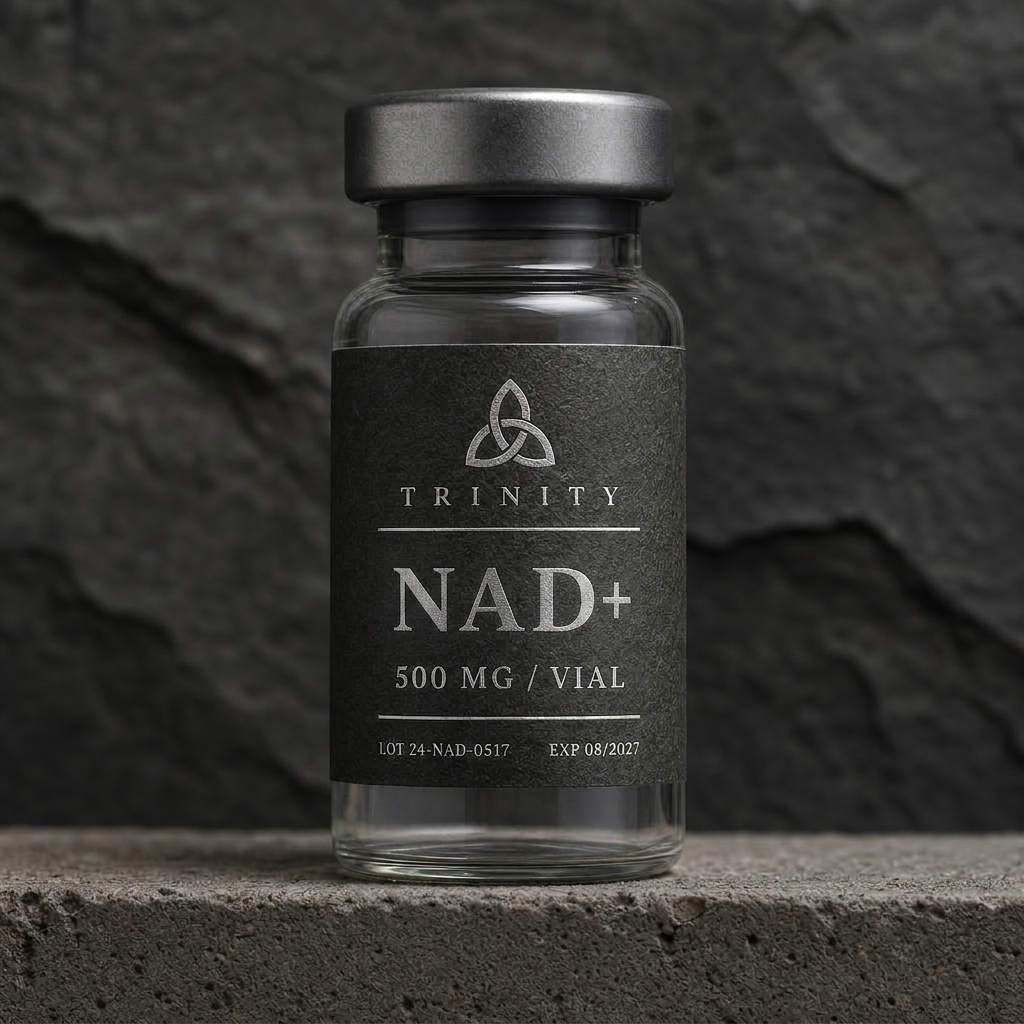
NAD+
Cellular coenzyme for mitochondrial, DNA-repair and longevity research.
COA AvailableAvailable in 500mg · 1000mg
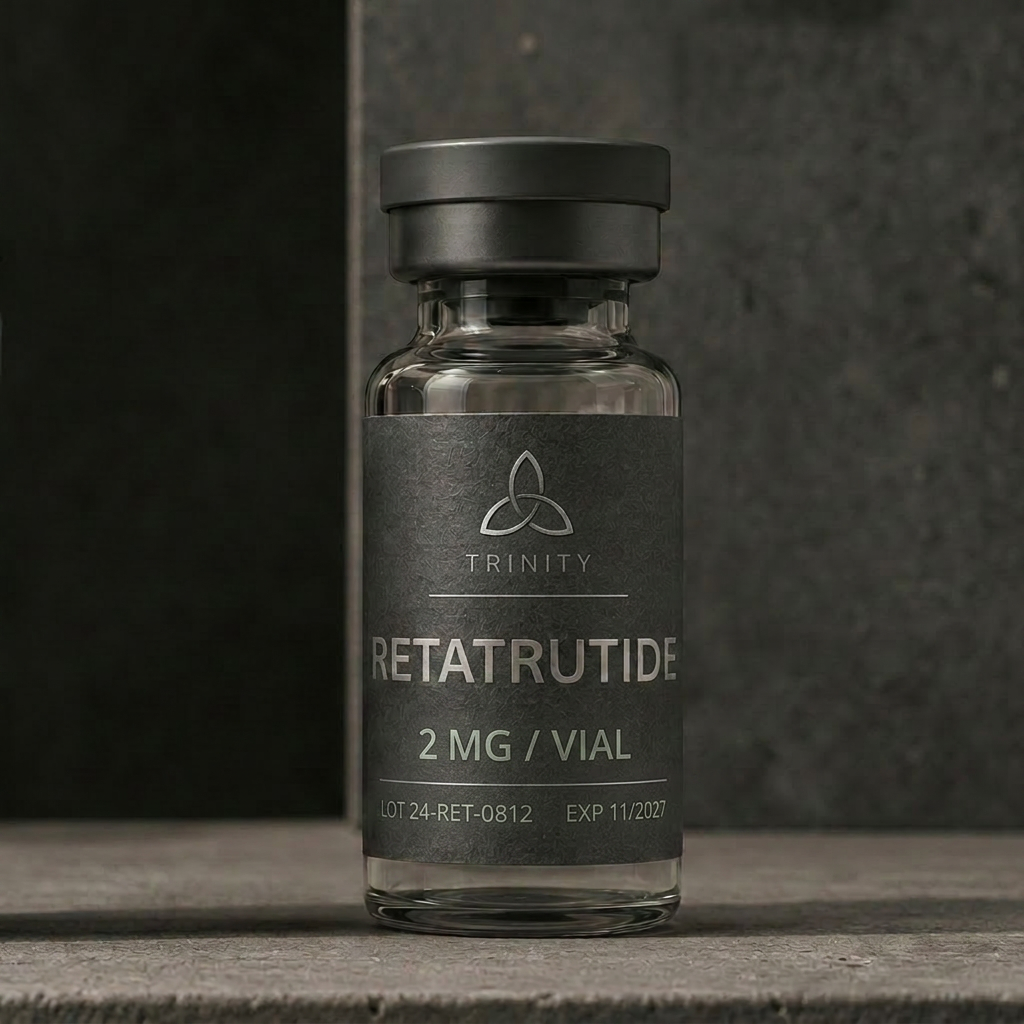
Retatrutide
Triple GLP-1/GIP/Glucagon agonist — next-gen metabolic research.
COA AvailableAvailable in 5mg · 10mg · 20mg · 40mg
Third-party verified
ISO 17025 accredited lab — Batch TR-MOTSC-2026-001
HPLC Purity
98.8%
Molecular Weight
✓ Verified
Endotoxin (LAL)
<1.0 EU/mg
Heavy Metals (ICP-MS)
✓ Pass
MOTS-c — frequently asked
What makes MOTS-c unusual?
It is encoded in mitochondrial DNA rather than the nuclear genome, yet acts on nuclear gene expression — a rare retrograde signalling mechanism.
Why is it called an exercise mimetic?
It activates AMPK, the same energy-sensing pathway triggered by exercise and caloric restriction, and circulating levels rise after exercise in humans.
Is there human data?
Human data is observational so far — circulating MOTS-c levels, exercise response, and the centenarian K14Q variant. Interventional trials in humans have not been completed.
What purity do you guarantee?
≥98.5% by HPLC with mass-spec confirmation and a batch-matched COA.
How fast does it ship?
Orders placed before 2pm ET ship the same business day from Toronto with tracked Canada-wide delivery, typically arriving in 1–3 business days. Cold-pack packaging is used on every shipment.
What if the purity doesn't match the COA?
Every batch is HPLC and mass-spec verified by an ISO 17025 accredited third-party lab, and the batch-matched COA ships with your order. If an independent test comes back below the stated purity, we replace the order or refund it in full.
Is this legal to purchase in Canada?
Yes — these compounds are sold strictly as in-vitro research chemicals for laboratory use. They are not for human or veterinary use, and it is the purchaser's responsibility to comply with applicable federal and provincial regulations.
Ready to add MOTS-c to your research?
≥98.5% HPLC-verified, endotoxin and heavy metals tested, batch-matched COA included. Ships same business day from Toronto.
Research Use Only Disclaimer
This product is sold exclusively for in-vitro research and laboratory use only. It is NOT intended for human or veterinary use, consumption, injection, or any clinical application. This product has not been evaluated by Health Canada, the FDA, or any other regulatory authority for safety or efficacy in humans or animals. Trinity makes no medical claims regarding this compound. Researchers must comply with all applicable federal, provincial/state, and local laws regarding the purchase, storage, and use of research compounds. By purchasing this product, you confirm you are a qualified researcher or licensed professional acting within the bounds of applicable law.